











https://doi.org/10.66242/PMJL9589
Download this review as a Word Document
Return to Issue 6
Marc W. S. Jaffré, The Courtiers and the Court of Louis XIII, 1610-1643. Oxford: Oxford University Press, 2025. xviii+384pp. figures, bibliography, and indices. £119.00 (cl) ISBN: 9780198957614.
Review Essay by Jonathan Spangler, Manchester Metropolitan University
The world of the court both is and is not heavily studied. Extensive volumes were published about the French court in particular in the nineteenth century, an era both fascinated by and repelled by the culture of the pre-revolutionary regime—and thus many historians of the twentieth century assumed it had been covered as a historical topic, and moved on. Revisionist historians were dazzled by a sociologist’s vision of the court, and Norbert Elias is still used as a benchmark for teaching and research, despite having been debunked for its non-empirical approach and overreliance on one heavily biased primary source, the memoirs of the Duke of Saint-Simon.[1] Subsequent historians like Jean-François Solnon pulled together useful overviews of the French court but mostly focused on the Valois period, and Henri III in particular.[2] Henri III’s court is remembered for its glamour and gallantry, but was also crucial in terms of his issuance of court regulations regarding rituals and etiquette. Solnon’s work sat for over a decade until another French scholar took a serious look, this time at the court of Louis XIV, in characteristic micro-historical style: Emmanuel Le Roy Ladurie.[3] Since then, Bourbon courts have had numerous other detailed explorations, looking at etiquette, the high nobility, the household staff, the role of theatre, and so on. The exception has been the court of Louis XIII. While historians have looked at this era of court culture from the angles of physical spaces, religion or high politics, no one has examined the institution of the court itself, in all its complexities. This opening is where Marc Jaffré’s thoroughly researched and insightful book fits into the historiography.
The French court between the assassination of Henri IV in 1610 and the deaths of Cardinal Richelieu and Louis XIII in 1642-43 has been examined in recent years most interestingly by scholars of women’s lives, notably in biographical works on Marie de Médicis and Anne d’Autriche, but also on the emergence of salon culture, which bridged the gap between the court and urban society in Paris.[4] But rarely did historians look at Louis XIII himself, or his court. Sharon Kettering’s last book, a case study of the Duc de Luynes, favourite of Louis XIII, stands out for its attention to detail and its understanding of the intricacies of brokerage and clienteles that was central to the functioning of any early modern European court.[5] It is from this point, where Marc Jaffré’s book is launched. His book examines “the courtiers & the court”—ensuring coverage of people, spaces, and institutions—that is inclusive of the high nobility, the household servants and the musicians and artisans, but also includes the women of the Paris salons, the financiers who greased the wheels of the court’s functionality, and the merchants who provided the food and furnishings. It is in these latter categories that Jaffré’s book is most innovative.
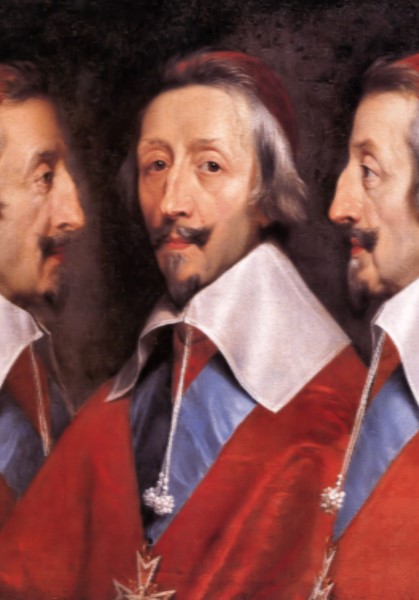
Jaffré’s point of departure for this study, and a framing device to which he frequently returns, is the oft-noted complaint put forward by Cardinal Richelieu in his Testament Politique that Louis XIII allowed his court to decay, by not being fully in charge of his court, too reserved and disinterested. His court thus did not flourish like those of the past.
In his introduction, Jaffré rightly weighs in on the side of recent Richelieu historians to remind the reader that the Cardinal, though presenting himself as an outside observer, was just as much a courtier himself, and that his testament and memoirs were written to justify (to posterity) his own position within the court, which benefitted from weakening the position of the King and his senior courtiers. The introduction also takes up the by now standard position of court historians that there is no clear division between the private world of the court and the public world of affairs of state, and that ceremonies and rituals were not mere displays of arrogance or petty disputes but were crucial elements of the positionings of France’s political elites. Jaffré argues that if these ceremonies and court entertainments were indeed ignored by Louis XIII, then courtiers looked elsewhere, namely to the salons and other venues in Paris, and that this is where we must also look for “the court” in this period. I am not completely convinced: if we go by the classic definitions of “the court” as the space in which the monarch was and the people who surrounded and supported him, could it have existed without him? This repositioning is worth further discussion, and there are certainly other court cultures that have been written about that existed with an absent monarch, like Naples.[6] The theme is furthered by Jaffré’s second over-arching argument of the book: that institutions and regulations of the court were not made so much by the monarch (or by his minister-favourite), but by the courtiers themselves, and not just grandees like the Grand Maître de France or the Grand Chambellan, but by the more numerous courtiers who staffed the bedchamber, the kitchens, the stables. The argument moves outside the palace in examining the “court on the move,” primarily for military campaigns, and draws us back to what the court was originally developed for in the history of early medieval kingship.
By challenging Richelieu’s own idea that Louis XIII’s court was faltering, Jaffré’s first chapters present the court in its own light, not necessarily as a reflection of the individual personality of Louis XIII, sombre and withdrawn, to demonstrate that it was in fact “vibrant, expanding, and developing” (p. 22). The book overall is divided into four sections: institutions, culture, business and travel. The first of these looks in detail at some of the more rank-and-file members of the court, those who work in the kitchens or the stables, while the second focuses more on the higher end of the court, the heads of departments, the senior courtiers and members of the King’s own family. Both of these (and those that follow) are richly supported by archival material, which the author has painstakingly combed through and assembled to support his overall argument about the organic, rather than top-down, nature of the evolution of the court.
The point is made several times, and always supported with an almost overwhelming amount of primary source evidence, that much of the innovations of the court in this period were not driven by any royal desire (or, as it turns out, a cardinal-minister’s desire for control of the monarch himself, not just the courtiers, p. 126), but by the courtiers themselves, and usually the result of squabbles over policies and regulations. It is precisely the high number of such squabbles that provides the archival material here, since they were recorded in legal documents (pp. 84-90). It was, as Jaffré argues, a sign of the court’s vibrancy, and not disorder as described by Richelieu, who disliked the traditional French court culture of openness and easy access to the monarch. This is one place where the author might place this court more in the broader context of European court cultures, by looking at one of the chief divisions between an open court (like France) and one of the more “closed” courts, like Burgundy and its cultural “offspring” Madrid and Vienna. This is discussed somewhat in chapter 4 (on ceremonies and rituals), where a very good point is made that the boundaries between public and private areas (Hall and Chamber) and those who have jurisdiction over them (the Grand Master and the Grand Chamberlain) were often blurred and led to clashes and redefinitions of policy, and that these rivalries were not only about status, but also about more tangible elements of power (p. 153).
Individual case studies abound in these chapters that will be of interest to scholars of the court. For example, the development of the office of the Great Provost of France, a policing office poised between the inside and the outside institutions of the court; or the rivalries between two institutions that were definitely outside, the Great Stables and the Small Stables, and the careers of the Duc de Bellegarde and François de Baradat (Grand Equerry and Premier Equerry respectively). Such case studies demonstrate how these institutions functioned and how informal personal royal favour remained central despite the regulations promulgated in the reigns of Henri III and Henri IV. One of the fascinating details (of many) that emerge is that not all of the animals associated with the King’s hunting needs were managed as part of the outdoor court, but were instead the prerogative of the Bedchamber—some of the hunting birds in particular were under the jurisdiction of the Premier Gentleman of the Chamber or the Master of the Wardrobe, as were some of the specific hunting dogs (pp. 65, 67, 72). Why this was so is not fully explained, but certainly pertained, again, to the changing nature of royal favour, in this case the powerful influence the Grand Falconer, Luynes, had over the teenaged king, and to the overarching point that much of what seventeenth-century authors wrote about as a “well-regulated” court, was in fact ad hoc and ever changing.
Chapters three and four engage more with the higher nobility, faction and politics. In particular Jaffré looks at the court as a space for multiple interests beyond those of the King, notably of his family members or of his cousins the princes of the blood—for example in looking at the Spanish elements of Queen Anne of Austria’s household (pp. 116-117), or the rivalries between the Prince of Condé and the Count of Soissons (pp. 107-112). A particularly intriguing detail in chapter four (on ceremonial and ritual) reveals how the rivalry between Soissons and Condé over giving the King his napkin at a meal, was resolved by giving the job to the King’s brother Gaston, since he outranked both (p. 152). The author notes that Gaston was only eleven, but it is worth adding that Soissons himself only fifteen and Louis XIII eighteen—so it is important to consider that these were not experienced adult courtiers making calculated political decisions. All of this engages with areas of court historiography that are flourishing, from faction to satellite courts. One area this book might have looked at more specifically (though there are elements of it scattered throughout), is the strategizing employed by the highest-ranking courtiers to maintain their power at court, usually by monopolising senior court offices, but also the reverse: how the monarchy continued to make use of the provincial power networks of senior courtiers to maintain control over the entire Kingdom.
This leads us to the most innovative chapters of the book (5, 6 and 7), which look at Paris as an alternative space for court entertainments, and the blurring of the boundaries between court and capital as seen in the examination of the positionings of financiers and merchants. As before, much of this section helps us see that “the court” at its broadest sense functioned with or without the person of the monarch, a “decentring of the king” (p. 159). Chapter 5, on entertainments, provides a wealth of detail about those who served in the King’s musical establishment (an area of the court often overlooked), notably in the context of the buying and selling of offices, just like any other position at court. The latter part of the chapter focuses on the salons in Paris, and how bored courtiers could look elsewhere than the royal palaces for their entertainments. It also makes the point that if the monarch was not particularly interested in patronising the arts (p. 189), other princes could and did step in and make use of their own court spaces such as the Palais du Luxembourg for Gaston, duc d’Orléans (p. 194). This sits well with other work being done on “satellite courts,” including that of Pierre Gatulle for Gaston, or my own for both Gaston and later his nephew Philippe.[7]
Chapter 6 looks at the financiers of the court. Although the author stresses the particular difficulties for this period due to a paucity of surviving sources (pp. 202-03), he nevertheless again dazzles with the level of detail, which allows him to create quite useful tables and charts to drive the analysis (pp. 211, 213). In this chapter and the next, on the merchants who supplied the court, Jaffré demonstrates that one of the goals of these two social groups was not just to make money, but to advance socially, in part by marrying into court families wherever possible. It is here where the line blurs between what is or is not a courtier, and while the author contends that these should be seen as courtiers (pp. 235-36, 238, 241), I remain sceptical, given that contemporary texts so often state desires to go to court or to become courtiers—which suggests that they did not consider that this was where or what they already were. Looking at printed genealogies of the time, it is clear that a line was crossed once a financier or merchant’s son obtained a major military post or court office and no longer considered himself a bourgeois.
This subject leads to the final two chapters, on the itinerant court and the court at war, which both argue that the court retained more of its dominant features from the Middle Ages than has been previously conceded. This point—that the court remained peripatetic and focused on military endeavours more than later courts—works very well for the reign of Louis XIII, and indeed into the reign of Louis XIV, but if we look at the longue durée picture, we can see that Louis XV and especially Louis XVI rarely left Versailles, and that the nobility achieved an even firmer monopoly over the military’s officer corps after the reforms of the mid-eighteenth century. It is important that historians continue to study the social and military aspects of the court together, though it is a stretch to say that court historians consider the court in the seventeenth century as “incompatible” with war (p. 308).
In his general conclusion, Marc Jaffré reiterates one of the central points of this book, so generously supported with primary source material of the sort that is so often overlooked or overused by historians—the equivalent of payslips and administrative complaints today—to stress that the court of France was organic and developed and changed according to both the monarchs’ and the courtiers’ wishes and ambitions. In particular (p. 313), the author stresses that courtiers favoured the more traditionally open approach of the French court—in contrast to those in Spain or Austria, or the more regulated court of the late Valois—and thus welcomed Louis XIII’s more hands-off approach to managing his court, much to Cardinal Richelieu’s annoyance.
Jonathan Spangler
Manchester Metropolitan University
j.spangler@mmu.ac.uk
Notes
[1] Jeroen Duindam, Myths of Power: Norbert Elias and the Early Modern European Court (Amsterdam: Amsterdam University Press, 1995).
[2] Jean-François Solnon, La Cour de France (Paris: Fayard, 1987).
[3] Emmanuel Le Roy Ladurie and Jean-François Fitou, Saint-Simon ou Le système de la Cour (Paris: Fayard, 1997).
[4] Jean-François Dubost, Marie de Médicis: la reine dévoilée (Paris: Payot, 2009); Chantal Grell, ed., Anne d’Autriche: infante d’Espagne et reine de France (Paris: Perrin, 2009).
[5] Sharon Kettering, Power and Reputation at the Court of Louis XIII: The Career of Charles d’Albert, duc de Luynes (1578-1621) (Manchester: Manchester University Press, 2008).
[6] See Gabriel Guarino, Representing the King’s Splendour: Communication and Reception of Symbolic Forms of Power in Viceregal Naples (Manchester: Manchester University Press, 2010).
[7] Pierre Gatulle, Gaston d’Orléans: entre mécénat et impatience du pouvoir (Seyssel: Champ Vallon, 2012); Jonathan Spangler, “In Service to the King’s Brother: Aristocratic Court Families and Alternative Pathways to Royal Patronage in Early Modern France, 1550-1700,” in Marion Duchesne, ed., Frères de roi en Europe (XVe-XVIIe siècles) (Paris: Classiques Garnier, 2024), pp. 77-100.
Copyright © 2026 by the Society for French Historical Studies, all rights reserved. The Society for French Historical Studies permits the electronic distribution for nonprofit educational purposes, provided that full and accurate credit is given to the author, the date of publication, and its location on the H-France website. No republication or distribution by print media will be permitted without permission. For any other proposed uses, contact the Editor-in-Chief of H-France.
H-France Forum
Volume 21 (2026), Issue 6, #3
https://doi.org/10.66242/PMJL9589